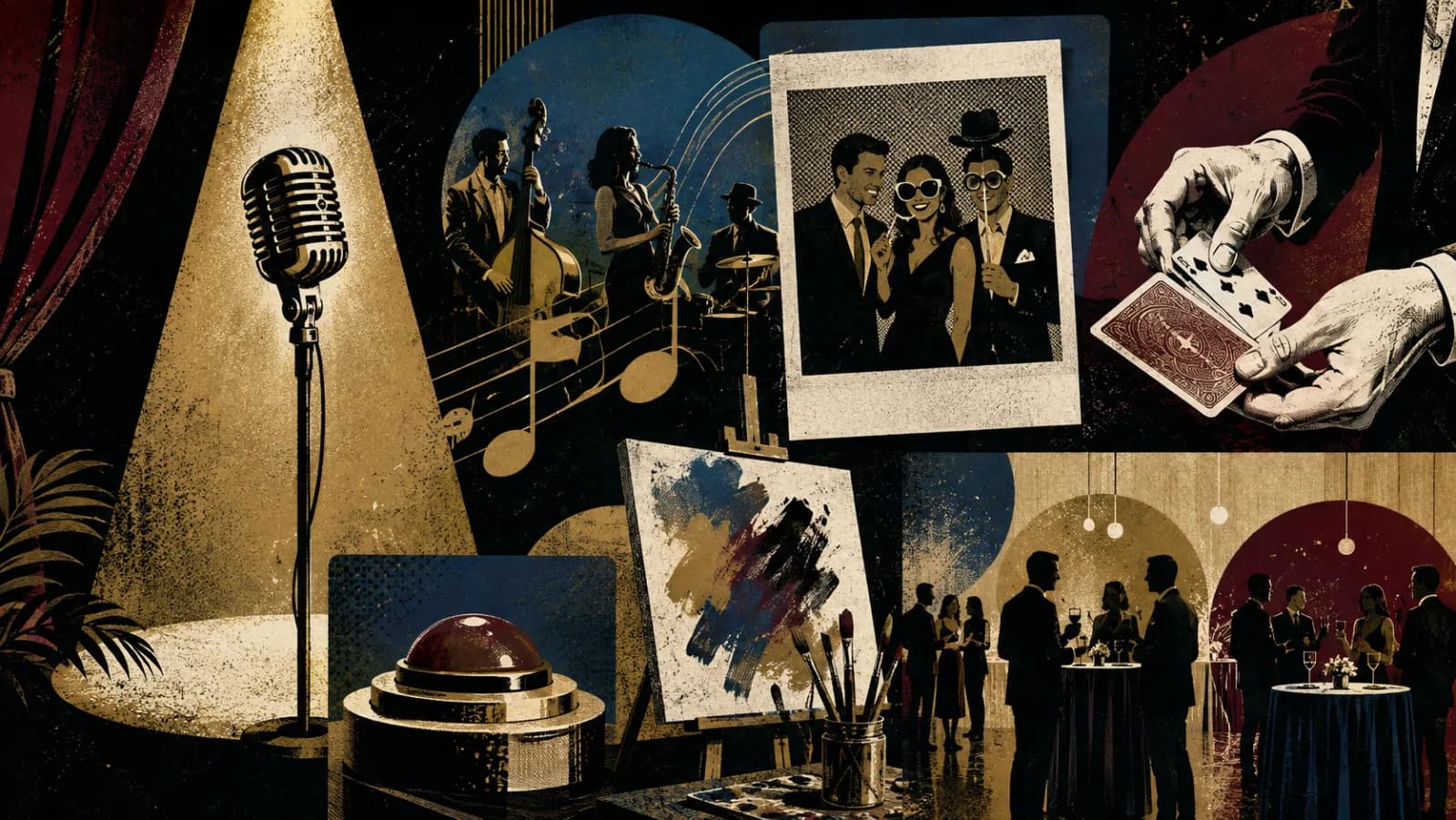
The phrase “corporate entertainment” covers everything from a pianist at breakfast to a comedian closing a national conference. The right choice depends less on novelty than on what you need the room to do: pay attention, mingle, reset after dense sessions, celebrate, or stay for the reception.
Use this list as a decision tool. Each idea includes the situation where it earns its space on the run of show.
High-attention stage entertainment
1. Corporate comedian
Best for a shared reset after sessions, an after-dinner feature, or a memorable close. It has a small physical footprint but depends on strong sound, lighting, and audience fit.
2. Storytelling keynote
A skilled storyteller can connect a business theme to a human narrative without feeling like another training session. Review the talk for substance as carefully as stage presence.
3. Game-show host
Good for awards, product knowledge, or an afternoon energy lift. Keep scoring simple, prizes visible, and rounds short.
4. Improv performance
Useful for collaborative themes and flexible timing. Ask how the troupe handles audience suggestions and corporate boundaries.
5. Specialty visual act
A juggler, speed painter, mentalist, or movement act can cross language barriers. Confirm sightlines and production requirements before falling in love with the demo reel.
Entertainment that improves networking
6. Close-up magician
Small groups form naturally around a roaming performer. This works during arrivals or receptions without requiring everyone to stop talking.
7. Live illustrator
The artist can capture attendee portraits, session ideas, or a visual event summary. Decide whether the goal is guest keepsakes or shareable conference content.
8. Curated tasting
A guided coffee, chocolate, tea, or alcohol-free cocktail tasting gives strangers an immediate subject to discuss. Plan allergies and throughput.
9. Conversation game lounge
Simple tabletop prompts and low-stakes games help guests who dislike unstructured networking. Avoid anything that requires a twenty-minute rules explanation.
10. Local cultural pop-up
Feature a regional musician, maker, storyteller, or food tradition. Pay the artist properly and provide context so it feels like programming, not decoration.
Celebration and team participation
11. Live band
A band turns a reception into a celebration, especially when the set list reflects the age range in the room. Budget for production and stage space.
12. DJ and emcee
Flexible, compact, and effective when one person owns both music and clean transitions. Share pronunciation notes and the schedule.
13. Dueling pianos
Built for requests and group singing. Best after formal programming, when participation can be loud and loose.
14. Team trivia
Easy to customize and scale. Balance company questions with broad categories so vendors, partners, and new employees can participate.
15. Collaborative build or give-back activity
Teams create art, assemble donations, or solve a physical challenge. Choose a format with a clear finish and no forced vulnerability.
A four-question filter for any idea
Entertainment works when it solves an event problem. “We need 30 minutes of focused energy after dinner” is a useful brief. “We saw this on TikTok” is how a mechanical bull arrives at a leadership retreat.
- What should guests be doing during this part of the event?
- Can everyone see, hear, access, or comfortably decline the activity?
- What does the idea require from the room, schedule, and production team?
- Does the vendor have evidence of succeeding with this audience—not merely a beautiful promo reel?
Frequently Asked Questions
Good questions, straight answers
How do I choose entertainment for a corporate event?
Start with the event goal, audience mix, schedule, room, and acceptable participation level. Then compare vendors with relevant corporate footage and clear technical requirements.
What corporate entertainment works for a mixed-age audience?
Clean comedy, close-up magic, live music with a broad set list, visual acts, and well-designed trivia can all work when matched to the room and schedule.
How much time should corporate entertainment take?
A featured act commonly needs 20 to 45 minutes. Roaming and reception entertainment can run in blocks over one to three hours.
Sources and useful links
Corporate Entertainment
Need a Comedian Who Knows the Room?
Sheryll brings clean, customizable comedy to company events, conferences, and real estate audiences.
Explore Corporate Booking